
When a business starts growing fast, it feels like a win worth celebrating. But behind the scenes, the systems that quietly kept everything running smoothly often start cracking under pressure nobody saw coming. Pipes back up, signage looks outdated, equipment can’t keep pace, and suddenly the growth that should feel exciting turns into a daily scramble. Understanding why these breakdowns happen — and what to watch for — can help you protect your investment before small issues become expensive emergencies.

The Hidden Cost of Rapid Expansion
Growth rarely arrives evenly. A business that comfortably handled a certain volume of activity for years can suddenly face double or triple the demand within a matter of months — a marketing campaign goes viral, a new location opens, or a long courted enterprise client finally signs. What looked like slow, linear progress on a five-year forecast can compress into a six-week scramble, and the operational systems built for the old pace simply weren’t designed to absorb that kind of shock.
Consider a business that processed 200 orders a week with a single shared inbox and a part-time bookkeeper. At 600 orders a week, that same inbox becomes a black hole of missed messages, the bookkeeper falls two weeks behind on reconciliation, and customer complaints start piling up before anyone notices a pattern. None of these tools failed outright — they simply hit a volume ceiling nobody had mapped out in advance.
Most owners don’t realize this until something actually breaks: a payroll run gets delayed, inventory counts stop matching reality, or a critical approval sits untouched for days because the person responsible is now managing five times their original workload. By the time the failure is visible, the underlying strain has usually been building for weeks, quietly eroding margins and customer trust.
This is why understanding the strain points ahead of time — staffing ratios, software capacity limits, approval bottlenecks, and cash flow timing — matters so much more than reacting after a failure. Mapping these thresholds before growth hits gives a business room to reinforce or replace systems on its own schedule, rather than under the pressure of an operational crisis already in progress.
The frustrating part is that these failures rarely happen one at a time. Once one system is stressed, it tends to expose weaknesses in others, creating a chain reaction that feels overwhelming. A shipping delay caused by an overworked fulfillment process, for example, can trigger a spike in customer service tickets, which then overwhelms a support team still using spreadsheets to track requests.
This domino effect is what makes growth-related breakdowns so costly compared to routine operational hiccups. A single bottleneck might cost you a few hours of rework, but a cascading failure across three or four interconnected systems can eat weeks of productivity and erode customer trust in the process. Companies that scale from 50 to 200 employees, for instance, often see this play out in onboarding, payroll, and inventory systems simultaneously, simply because none of them were built to handle triple the volume.
Recognizing the pattern early gives you a real chance to plan upgrades on your own timeline instead of during a crisis. That means watching for leading indicators — rising error rates, slower response times, or an uptick in manual workarounds — before they become full-blown outages. Teams that build in quarterly system reviews, rather than waiting for something to break, are far more likely to catch these weak points while a fix is still a planned project instead of an emergency.
Waste Volume Increases Faster Than Anyone Expects
One of the first things to buckle during growth is waste management. A property that used to generate a manageable amount of trash each week can suddenly find bins overflowing, hallways cluttered, and collection schedules falling behind actual need. This is a common blind spot because waste output scales with activity, not with square footage, so it sneaks up on owners who are focused on other priorities.
Bringing in properly sized dumpster rentals for a construction phase, renovation, or seasonal surge can prevent a mess that otherwise spills into daily operations. Matching container size and pickup frequency to your actual volume, rather than guessing, keeps the property looking presentable and avoids fines from overflow violations.
- Track how quickly bins fill between pickups to spot volume increases early
- Consider temporary container upsizing during any renovation or seasonal rush
- Separate recyclables and debris to reduce total hauling costs
- Reassess waste needs every time occupancy or foot traffic changes significantly
Plumbing Systems Were Not Built for New Demand
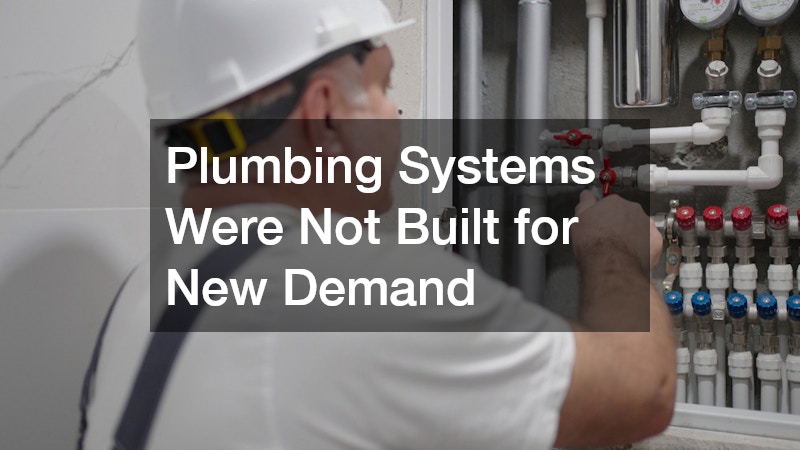
Drains and pipes are engineered around expected usage, and when that usage jumps unexpectedly, the results show up as slow drains, backups, and unpleasant odors. This is especially true in any property with a kitchen, laundry facility, or high guest turnover, where grease, food particles, and debris accumulate faster than the system can process them. Many owners only notice a problem once water is backing up into a sink or floor drain, which usually means the issue has been building for weeks.
Working with commercial drain cleaning companies on a regular schedule, rather than only when there’s an emergency, keeps buildup from reaching a breaking point. For any property with food service, routine grease trap cleaning is just as critical, since neglected traps are one of the leading causes of sudden, foul-smelling backups that shut down operations for a day or more.
- Watch for slow-draining sinks or tubs as an early warning sign
- Schedule grease trap service based on usage volume, not just a calendar date
- Avoid pouring oils, grease, or fibrous scraps down any drain
- Keep a record of past service visits to track how quickly buildup returns
Your Building’s First Impression Stops Matching Its Growth
As a property expands, adds new tenants, or shifts its offerings, the signage out front often gets left behind. A faded, undersized, or outdated sign sends a message that doesn’t match what’s actually happening inside, and that mismatch can quietly cost you customers who judge a business by its exterior before ever walking in. This is easy to overlook because it doesn’t cause an operational breakdown, but it does affect how much foot traffic your other systems ever have to handle in the first place.
Updating custom business signs to reflect a new name, expanded services, or a refreshed brand is a relatively simple fix compared to the plumbing or structural issues growth can cause elsewhere. It’s worth treating signage as part of your overall growth plan rather than an afterthought, since it directly shapes first impressions and repeat visits.
- Walk your property’s exterior periodically and view it as a first-time visitor would
- Replace worn or dim lighting on signs, since visibility affects perceived credibility
- Update signage promptly after any rebrand, expansion, or service change
Kitchen and Cold Storage Equipment Reaches Its Limit
Any property that stores or serves food is especially vulnerable during growth spurts. Refrigeration units sized for a smaller menu or lower customer count start running constantly just to keep up, which shortens their lifespan and raises energy bills. Once a unit is overworked long enough, it can fail entirely, sometimes taking an entire inventory of perishable goods down with it.
Planning ahead for a commercial refrigeration install, rather than waiting for a unit to die during a busy season, protects both your inventory and your bottom line. Sizing new equipment for where the business is heading, not just where it stands today, avoids having to repeat this expensive process again in another year or two.
- Monitor internal temperatures daily rather than relying on appearance alone
- Note how often compressors are cycling, since constant running signals overload
- Plan refrigeration upgrades around projected growth, not just current need
- Keep maintenance records to catch declining efficiency before a full failure

The Building Envelope Takes On New Stress
Growth often means more foot traffic, more equipment on the roof, and more strain on the structure that protects everything inside. Roofs that were fine for years can develop leaks once additional HVAC units, signage, or rooftop equipment get added without a proper structural review. Water intrusion from a stressed roof is one of the most expensive problems to fix late, since it can damage inventory, wiring, and interior finishes before anyone notices.
Bringing in residential and commercial roofing contractors for an inspection whenever new equipment is added, or before a growth-driven renovation begins, catches weak spots while they’re still cheap to fix. If the growth involves reconfiguring interior space entirely, working with commercial remodeling contractors ensures the changes are handled by people who understand load, code requirements, and how new work interacts with existing systems.
- Schedule a roof inspection any time new rooftop equipment is planned
- Check attic or ceiling areas for water stains after heavy rain
- Involve a contractor early in any remodel that changes structural layout
- Confirm permits and code compliance before major interior changes begin
Specialized Equipment Needs Become Bottlenecks
As operations scale, tasks that used to happen occasionally start happening constantly, and the equipment or materials that support them need to keep pace. A property or business that occasionally needed welding gas for small repairs may suddenly need a steady, reliable supply once fabrication or maintenance work becomes a regular part of operations. Running short mid-project causes delays that ripple through an entire schedule.
Heavier growth, especially anything involving construction, signage installation, or equipment placement, often calls for crane services that weren’t part of the original plan. Underestimating how often lifting equipment will be needed leads to last-minute rentals at premium rates, which is far more expensive than planning for it in advance.
- Set up a reliable supply arrangement rather than sourcing materials reactively
- Estimate lifting needs before a project starts, not once it’s underway
- Build in buffer time for equipment delivery during busy seasons
- Compare rental versus scheduled service costs for recurring equipment needs
Supply and Material Logistics Fall Behind
Growth doesn’t just strain what happens on-site, it also strains everything coming in from outside vendors and suppliers. Any business relying on raw materials, particularly in construction, landscaping, or manufacturing, can find that supply timelines that used to work smoothly suddenly can’t keep pace with new project volume. This is especially visible for operations sourcing wood products, where working with logging companies directly, rather than through multiple middlemen, can shorten lead times considerably.
Building stronger, more direct supplier relationships before you desperately need them gives you leverage and reliability when demand spikes. Waiting until a shortage actually happens puts you at the mercy of whoever has stock left, often at a worse price and a longer wait.
- Diversify suppliers so a single delay doesn’t halt an entire project
- Ask vendors about their capacity limits before committing to large orders
- Build lead time buffers into project timelines during peak seasons

Warning Signs That Systems Are About to Fail
Most operational breakdowns give off warning signals well before they become full failures, but those signals are easy to dismiss when everyone is focused on growth itself. Slower drains, flickering signage, equipment running longer than usual, or repeated small delays are often treated as minor annoyances rather than early evidence of a bigger problem. Paying attention to these small signals is far cheaper than waiting for a complete breakdown.
Keeping a simple log of recurring issues, even informally, helps reveal patterns that are easy to miss day to day. If the same type of problem keeps showing up every few weeks, that’s a strong sign the underlying system needs an upgrade rather than another quick patch.
- Note recurring maintenance calls, even if each one seems minor on its own
- Track how often “quick fixes” are needed for the same issue
- Ask staff or tenants about recurring frustrations, since they notice problems first
- Review utility and service bills for sudden, unexplained increases
Growth is a good problem to have, but it only stays a good problem if the systems supporting it are allowed to grow alongside it. Waiting for a visible failure almost always costs more time and money than addressing strain early, whether that means resizing your waste service, updating aging equipment, or reinforcing your building’s structure. Start by walking through your own property with this list in mind and note where the warning signs already exist. Taking that first honest inventory is the clearest next step toward growth that doesn’t come at the cost of daily reliability.
