

The immense pressure that facility managers and property owners face on a daily basis is rarely understood by those outside the industry. Keeping a large-scale property safe, fully operational, and visually appealing is a relentless, round-the-clock endeavor. A commercial building is a living ecosystem of complex mechanical components, massive structural elements, and heavily trafficked pedestrian zones. In this environment, minor oversights do not simply disappear; they rapidly compound into massive financial liabilities, tenant disputes, and severe safety hazards.
The harsh reality of commercial property management is that reactive maintenance—the habit of waiting for things to physically break down before allocating the funds to fix them—is the absolute fastest way to drain your capital budget and drive away high-value tenants. When you operate reactively, you are forced to pay exorbitant emergency dispatch fees, accept rushed workmanship, and suffer through extended periods of operational downtime. True operational success requires a paradigm shift. It demands a heavily structured, proactive approach to both daily hygienic upkeep and large-scale structural renovations.
This comprehensive guide is designed to serve as your ultimate framework for property optimization. By breaking down the essential layers of facility management, we will provide you with a step-by-step roadmap to protect your asset. From fortifying exterior hardscapes against the harsh elements to managing heavy structural renovations, maintaining pristine landscaping, and executing rigorous daily sanitation protocols, this blueprint will ensure your property remains a highly profitable, competitive asset in a demanding real estate market.
Fortify Your Property’s Exterior Hardscapes and Plumbing
The exterior perimeter of your property is your first line of defense against both physical degradation and premises liability claims. The paved surfaces and subterranean plumbing systems endure the brunt of severe weather, heavy vehicular traffic, and natural shifting. Managing these high-liability areas requires constant vigilance, as a failure in your hardscapes or drainage can quickly cripple the usability of the entire property and invite devastating lawsuits.
Repair Trip Hazards and Seal Surface Fissures Promptly
Your parking lots, loading docks, and pedestrian walkways are subjected to extreme wear and tear. Asphalt and concrete are naturally porous materials, and when left unsealed, they are highly vulnerable to the destructive forces of the environment, particularly the freeze-thaw cycle.
-
Conduct comprehensive seasonal audits: You must conduct a thorough, documented walk-through of all parking areas and walkways every spring and fall. Look beyond the obvious issues and search for micro-fissures, alligator cracking, and uneven concrete lips caused by underlying root growth.
-
Address minor damage immediately: Do not wait for a small crack to become a massive pothole. Immediately patch surface depressions, grind down uneven concrete trip hazards, and apply heavy-duty joint sealants.
-
Invest in preventative surface sealing: Routine sealcoating is essential. Partnering with reliable commercial paving services for scheduled resurfacing prevents moisture from penetrating the surface and destroying the crushed aggregate sub-base, directly protecting the property owner from costly slip-and-fall litigation and vehicular damage claims.
-
Maintain strict ADA compliance: During your surface audits, ensure that all handicap-accessible ramps, curb cutouts, and painted fire lanes are in pristine condition and strictly adhere to federal accessibility guidelines.
Clear Underground Blockages to Prevent Flooding
Water is the single most destructive element to a commercial property. When rain and melted snow cannot efficiently drain away from your building’s foundation, the water will inevitably find its way inside, destroying drywall, ruining inventory, and compromising the structural integrity of the facility.
-
Implement preventative pipe clearing: Do not wait for water to pool ominously around your foundation walls or back up into your subterranean loading docks. Schedule preventative maintenance for your main sewer lines and exterior catch basins on an annual basis.
-
Utilize advanced clearing technology: Avoid relying on basic mechanical snaking, which often just punches a small hole through a blockage. Utilizing professional commercial drain cleaning involves high-pressure hydro-jetting, which completely scours the interior walls of the pipes, removing compacted debris, heavy grease buildup from restaurant tenants, and invasive tree roots.
-
Inspect catch basins and grates: Ensure that all surface-level storm grates are regularly cleared of autumn leaves, plastic wrappers, and landscaping debris to guarantee that water can quickly flow into the underground mitigation system during a torrential downpour.
Elevate Curb Appeal Through Strategic Landscaping

While the structural integrity of your property keeps it standing, the visual and environmental management of the exterior grounds dictates how it is perceived by the public. The curb appeal of a commercial building is deeply tied to its market value and its ability to command premium lease rates. A property with overgrown grass, dying shrubs, and weed-choked flowerbeds instantly signals neglect, creating a negative psychological impression on visiting clients and prospective tenants long before they reach the lobby.
Schedule Consistent Trimming and Mowing Routines
Landscaping in a commercial setting cannot be treated as an occasional weekend chore. It requires a highly regimented, scientific approach to horticulture that accounts for seasonal growth cycles, local climate conditions, and the specific needs of native flora.
-
Implement strict calendar-based schedules: Establish a non-negotiable routine for mowing, edging, and pruning. The frequency should be dictated by the season, requiring weekly visits during the rapid growth of spring and summer, and shifting to leaf removal and winterization during the autumn months.
-
Prioritize safety and sightlines: Landscaping is not just about aesthetics; it is about security. Ensure that sightlines at heavily trafficked intersections remain completely clear of overgrown shrubs. Tree branches must be aggressively cut back well away from the building’s facade, rooflines, and security cameras to prevent damage during high winds and to eliminate hiding spots for potential intruders.
-
Outsource for consistency: Outsourcing to a dedicated commercial lawn maintenance crew ensures the grounds look immaculate week after week without tying up your internal facility staff, allowing your on-site engineers to focus entirely on critical indoor mechanical issues.
Refresh Soil Coverings Seasonally to Suppress Weeds
The expansive flower beds, foundational plantings, and ornamental tree bases scattered across your property require active protection against soil erosion, drought, and invasive weed species. Bare dirt is not only visually unappealing, but it also creates a hostile environment for the expensive plants you have invested in.
-
Apply protective organic layers: Apply a thick, fresh layer of high-quality ground cover to all exposed soil at the start of the spring and fall seasons. This critical layer acts as a natural insulator, regulating soil temperatures during extreme heat and deep freezes.
-
Retain crucial moisture: During the blistering summer months, this protective layer naturally retains moisture, drastically reducing your reliance on expensive irrigation systems and keeping your plants hydrated during local drought restrictions.
-
Suppress invasive growth: Leveraging bulk commercial mulch services allows you to efficiently cover vast expanses of the property’s landscaping. This instantly boosts the overall curb appeal with a uniform, manicured look, while simultaneously starving invasive weed seeds of the sunlight they need to germinate, drastically reducing the need for harsh chemical herbicides.
Optimize High-Value Amenities and Interior Health
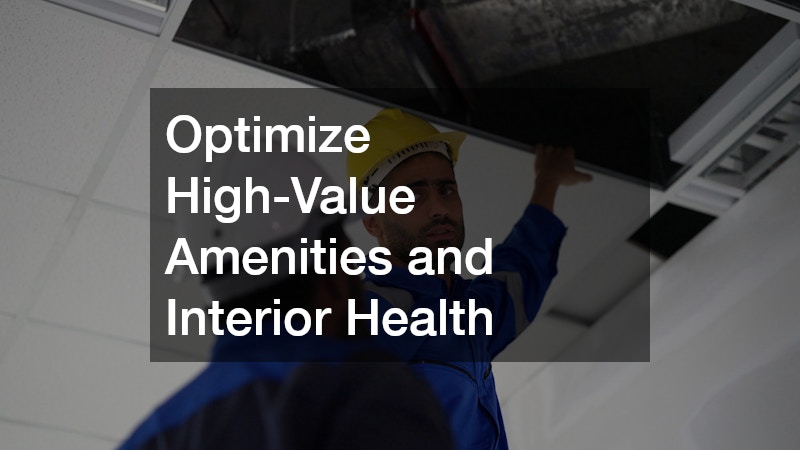
Once the exterior perimeter and landscaping are fully optimized, your operational focus must shift inward. The interior environment of your building, along with its specialized tenant amenities, directly impacts the daily lived experience of the occupants. Post-2020, the expectations for indoor health, sanitation, and safety have risen exponentially. Maintaining these interior spaces requires a rigorous commitment to hygiene and the careful management of high-liability features.
Balance Chemical Levels and Maintain Filtration Weekly
For luxury multi-family properties, upscale hotels, or corporate campuses that feature aquatic amenities, the management of these water features is an immense responsibility. A neglected pool is not just an eyesore; it is a severe biohazard and a massive liability risk.
-
Treat water chemistry as a daily priority: The chemical balance of a large body of water fluctuates constantly based on temperature, sunlight, and the number of bathers. You must diligently monitor pH levels, alkalinity, and calcium hardness to ensure the water is safe and comfortable.
-
Shock and sanitize effectively: Following periods of high occupancy or heavy rainstorms, the water must be properly shocked with oxidizing agents to break down organic contaminants and prevent the rapid spread of waterborne illnesses.
-
Maintain mechanical filtration: The massive subterranean filtration tanks must be routinely backwashed and the pump baskets cleared of debris to prevent bacterial growth in stagnant water. Hiring certified commercial pool services is absolutely mandatory to navigate the incredibly strict municipal health codes, manage dangerous storage chemicals safely, and keep these high-liability amenities legally open for tenant enjoyment.
Implement Deep Sanitation Protocols for Shared Zones
The overall cleanliness of a commercial building is the most immediate indicator of the management’s competence. A lobby with smudged glass, elevators with sticky buttons, and restrooms with overflowing trash cans will instantly infuriate tenants and drive away their clients.
-
Draft a granular Scope of Work (SOW): Do not rely on vague agreements with janitorial staff. Draft a highly detailed SOW that explicitly targets the highest-touch surfaces in the building, including elevator call buttons, stairwell handrails, restroom faucets, and lobby door handles.
-
Upgrade your disinfection technology: Standard dusting and wet-mopping are no longer sufficient for modern health standards. Upgrade your protocols to include electrostatic disinfection spraying, which evenly coats surfaces with electrically charged cleaning solutions to actively neutralize airborne pathogens and stubborn bacteria.
-
Utilize specialized night crews: Heavily vetted commercial cleaning companies possess the specialized, heavy-duty equipment and the trained night-crews necessary to achieve hospital-grade hygiene. By operating after hours, they ensure the facility is completely reset and sanitized without ever disrupting the daily business operations of your tenants.
Navigate Large-Scale Build-Outs and Structural Changes

A successful commercial property is never truly static. To remain competitive and accommodate the evolving needs of high-value tenants, the building must undergo continuous adaptation. This involves managing major tenant improvements, massive structural expansions, and total interior remodels. Executing these large-scale construction projects while the building remains partially occupied requires masterful logistical coordination and the selection of elite building partners.
Vet Firms for Safety Records and Large-Scale Capacity
When you authorize a massive structural overhaul, you are essentially turning a portion of your valuable asset into an active, highly dangerous industrial zone. The financial and legal risks associated with large-scale construction are immense, meaning your vetting process for building partners must be uncompromising.
-
Demand proof of extensive liability coverage: Never accept a standard general liability policy for a major build-out. Strictly audit prospective builders and demand proof of multi-million dollar umbrella policies and comprehensive workers’ compensation to shield your ownership group from catastrophic job-site accidents.
-
Check safety modifiers: Ask for the firm’s Experience Modification Rate (EMR). This is a numerical representation of their historical safety record. A high EMR indicates a history of accidents and OSHA violations, which is a massive red flag.
-
Verify logistical bandwidth: Only established commercial construction companies have the financial backing, the deep network of specialized subcontractors, and the logistical bandwidth to handle massive structural overhauls safely, legally, and without suddenly running out of operating capital mid-project.
Establish Clear Communication Channels and Timelines
The most common reason large construction projects fail, face massive cost overruns, or end up in bitter litigation is a breakdown in communication and a lack of strictly defined parameters. Scope creep—the gradual, undocumented expansion of the project’s goals—is the enemy of your capital budget.
-
Draft ironclad contracts: Prevent scope creep from the very beginning by drafting incredibly detailed contracts. These documents must outline exact project milestones, highly specific material specifications (down to the brand of the paint and the gauge of the steel), and rigid timelines.
-
Enforce financial accountability: Your contracts should include clearly defined financial penalties, or liquidated damages, for every day the project extends past the agreed-upon completion deadline due to contractor negligence.
-
Mandate structured site-walks: Maintaining an open, strictly documented dialogue with your commercial contractors is the only way to keep a multi-phase renovation on schedule. Mandate weekly, formal site-walks with the project foremen and the architects to review progress, address hidden structural surprises immediately, and sign off on completed phases before authorizing the next tranche of funding.
Upgrade Power Systems and Streamline Asset Logistics

The final tier of mastering commercial property management involves securing the invisible, underlying systems that power the facility and managing the complex logistics of physical assets during periods of transition. The electrical backbone of your building must be robust enough to handle the massive demands of modern technology, and your approach to storing physical inventory must be highly organized to prevent fire hazards and maintain a pristine professional environment.
Audit Main Breaker Panels and Retrofit for Efficiency
The electrical demands of modern commercial tenants are vastly different than they were even a decade ago. Between server farms, advanced telecommunications grids, and rows of electric vehicle charging stations in the parking garage, older electrical systems are being pushed to their absolute limits.
-
Conduct preventative thermal imaging: Do not wait for a breaker to trip or a panel to spark. Conduct thermal imaging on all main switchgear and high-voltage panels annually. This technology allows you to visually identify localized heat spikes and loose connections before they cause a catastrophic electrical fire or a building-wide blackout.
-
Execute energy-efficient retrofits: Take advantage of any vacant suites or upcoming renovations to systematically upgrade outdated, energy-draining fluorescent troffers to high-efficiency LED panels. This seemingly small change drastically reduces the building’s daily energy load and ambient heat generation, lowering your HVAC costs.
-
Ensure strict code compliance: Detail the absolute importance of bringing in a licensed commercial electrician to execute these upgrades. They will ensure that all new wiring, sub-panels, and dedicated circuits can handle the massive power draw of modern office equipment while remaining strictly up to local municipal fire codes.
Secure Off-Site Warehousing for Excess Inventory
Managing a large property means managing a massive amount of physical “stuff.” Between surplus lobby furniture, seasonal holiday decorations, large-scale maintenance equipment, and pallets of architectural materials waiting to be installed, finding a place to put everything is a constant struggle.
-
Eliminate on-site clutter: Never resort to cluttering active hallways, mechanical rooms, or empty, leasable suites with construction materials and spare furniture. Storing combustible materials in mechanical rooms creates immediate, severe fire code violations. Furthermore, using empty suites as impromptu junk rooms looks highly unprofessional when you are trying to tour the space with prospective, high-paying clients.
-
Protect sensitive architectural assets: Materials like custom millwork, expensive carpeting, and sensitive electronics cannot be stored in damp basements or un-insulated maintenance sheds where humidity and temperature fluctuations will destroy them before they are ever installed.
-
Utilize secure off-site logistics: Advise your procurement and facility teams to utilize climate-controlled commercial storage facilities. These specialized warehouses are designed to safely house surplus furniture, bulky equipment, and sensitive materials in a pristine environment. By keeping this inventory off-site, you free up valuable square footage within your building, maintain a spotless professional image, and ensure your assets are protected until they are exactly needed on-site.
Conclusion
Mastering the management of a large-scale commercial property is an intricate, highly demanding balancing act. It requires the visionary foresight to plan for the future, the meticulous attention to detail required to maintain daily aesthetics, and the rigorous discipline to enforce strict mechanical and structural standards. As we have explored in this blueprint, true operational excellence means you must balance the highly visible details—like pristine landscaping and immaculate lobbies—with the heavy, invisible infrastructural demands of electrical upgrades, subterranean plumbing, and massive structural renovations.
The strategies and protocols outlined in this guide should serve as a wake-up call to move away from the chaotic, expensive cycle of reactive repairs. Investing heavily in preventative maintenance, conducting regular diagnostic audits, and building ironclad partnerships with heavily vetted, specialized vendors transforms your maintenance budget from a series of sunk costs into a powerful strategy for active asset protection. This proactive stance prevents catastrophic failures, vastly extends the lifespan of your mechanical systems, and ultimately keeps your building highly competitive in a ruthless leasing market.
Do not wait for a pipe to burst, a tenant to complain, or an inspector to issue a fine to begin optimizing your facility. Take decisive action today. Encourage your facility managers to conduct a comprehensive, top-to-bottom walk-through this week. Identify your most pressing infrastructural vulnerabilities, outline your upcoming renovation goals, and begin securing the necessary logistical partners and specialized vendors to execute this ultimate blueprint for success.
