
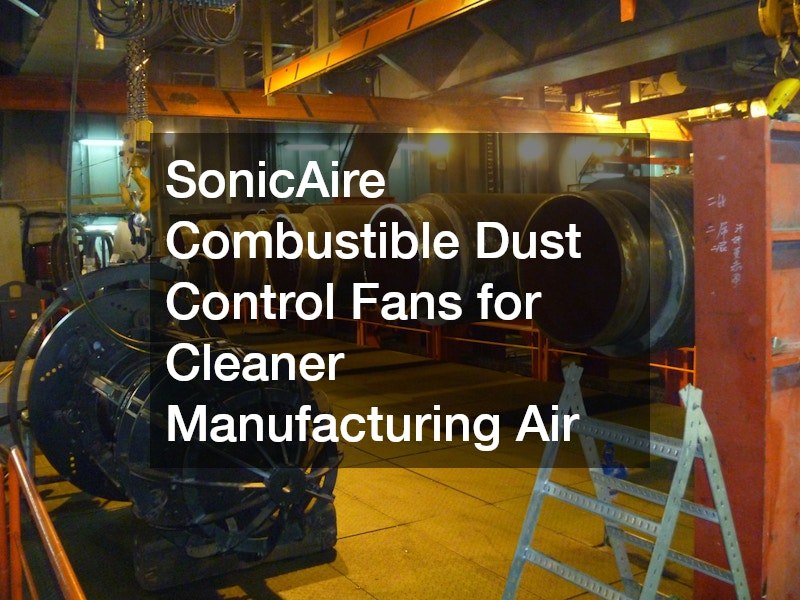
In many manufacturing environments, maintaining clean air is not just a matter of comfort—it is a critical component of operational safety, equipment performance, and regulatory compliance. Dust generated from production processes can accumulate quickly, especially in hard-to-reach areas such as rafters, beams, and overhead structures. When that dust is combustible, it introduces a serious hazard that requires ongoing control rather than periodic cleanup.
This is where engineered airflow solutions play an increasingly important role. Systems designed for continuous air movement help prevent dust from settling in elevated spaces where it can accumulate unnoticed over time.
Among these solutions, modern industrial fan systems are being used to support cleaner air conditions and reduce the risk associated with dust buildup in manufacturing facilities.
The Challenge of Combustible Dust in Manufacturing Environments
Combustible dust is produced in a wide range of industries, including woodworking, food processing, metal fabrication, textiles, and chemical manufacturing. While the particles may seem harmless when dispersed in the air or settled lightly on surfaces, they can become highly dangerous under the right conditions.
When fine dust accumulates in layers and becomes suspended in the air, it can ignite if exposed to a heat source or spark. In confined spaces, this ignition can lead to rapid flame propagation or even explosions. Because of this risk, organizations must take a proactive approach to dust management rather than relying solely on post-production cleaning.
Traditional cleaning methods—such as manual sweeping or occasional vacuuming—often fail to address dust that accumulates above floor level. Over time, overhead structures can become hidden reservoirs for combustible material. This is where continuous air movement strategies become important.
How Air Movement Supports Dust Control
Effective dust control is not only about removing particles from the floor; it is about preventing them from settling in the first place. When air remains stagnant in a large facility, dust particles naturally settle on beams, ducts, and other elevated surfaces. Once accumulated, these layers can be difficult and costly to remove safely.
Air circulation systems help reduce this buildup by keeping particles in motion long enough for them to be captured by filtration equipment or directed toward collection points. Instead of allowing dust to settle, controlled airflow encourages continuous movement, reducing the likelihood of accumulation in critical areas.
This approach is particularly useful in high-ceiling environments where conventional HVAC systems are not designed to manage particulate control effectively. Purpose-built industrial airflow solutions are often required to supplement existing ventilation systems.
The Role of SonicAire in Industrial Dust Management
SonicAire develops engineered fan-based systems designed to help industries manage airborne dust more effectively. These systems are commonly installed in facilities where dust accumulation in overhead spaces presents a safety and maintenance challenge.
Unlike standard ventilation equipment, these systems are designed specifically to address the behavior of industrial dust. By creating targeted airflow patterns, they help keep dust suspended longer, reducing the opportunity for it to settle in hazardous layers. This continuous movement supports a cleaner facility environment and can reduce the frequency of manual cleanup operations in elevated areas.
The approach is not about replacing dust collection systems but about enhancing them. Filtration systems typically capture dust at the source of production, while airflow systems help manage what escapes capture or disperses throughout the facility.
Integrating Combustible Dust Control Fans Into Facility Operations
In facilities that handle fine particulate materials, airflow systems are often integrated as part of a broader dust management strategy. This includes source capture systems, filtration units, and scheduled cleaning procedures.
Combining these systems creates a layered defense against dust accumulation. Source capture reduces the amount of dust entering the air in the first place. Filtration equipment removes a significant portion of airborne particles. Air movement systems help manage residual dust that remains in circulation or migrates to overhead spaces.
When properly designed and installed, these systems work together to reduce both visible dust and hidden accumulation zones. This integrated approach is especially important in large-scale manufacturing facilities where airflow patterns can vary significantly from one area to another.
Improving Safety and Operational Efficiency
One of the most important benefits of improved dust management is enhanced workplace safety. Reducing combustible dust buildup lowers the risk of ignition events and supports compliance with industry safety standards. Many regulatory guidelines emphasize the importance of controlling dust accumulation in all areas of a facility, not just at the production floor level.
Beyond safety, cleaner air conditions can also improve operational efficiency. Dust buildup can affect machinery performance, increase maintenance requirements, and contribute to unplanned downtime. Sensitive equipment may require more frequent servicing when exposed to airborne particulates.
Cleaner environments also support better visibility, reduced wear on components, and more consistent production conditions. Over time, these improvements can contribute to lower operating costs and improved reliability across manufacturing processes.
A Practical Approach to Dust Control Strategy
Implementing an effective dust control strategy requires understanding how dust behaves within a specific facility. Factors such as ceiling height, airflow obstructions, production processes, and material types all influence how particles move and settle.
Facilities that rely solely on point-of-use capture or periodic cleaning may still experience significant dust accumulation in overlooked areas. This is why many industrial environments are shifting toward continuous airflow solutions as part of their overall safety strategy.
Systems like combustible dust control fans are designed to operate continuously, helping maintain consistent air movement throughout the facility. This reduces the likelihood of dust settling in dangerous concentrations over time.
Visit SonicAire
Managing combustible dust in manufacturing environments requires more than reactive cleaning—it requires a proactive and layered approach that addresses both visible and hidden accumulation. By combining filtration systems, source capture methods, and engineered airflow solutions, facilities can create safer and more efficient working environments.
Technologies developed by SonicAire demonstrate how targeted air movement can play a key role in reducing dust buildup in overhead spaces. When integrated into a comprehensive dust management plan, these systems support cleaner air conditions and help mitigate long-term risks associated with combustible dust.
As industrial operations continue to evolve, strategies that emphasize continuous control rather than periodic intervention will remain central to maintaining safer, more productive manufacturing facilities.