
The home care industry has grown steadily as communities look for services that support aging adults, recovering patients, and families who want safer, more personalized care options. Interest in this field continues to rise because people see the value of care that comes directly to the client’s home, creating comfort and stability in ways traditional facilities cannot always match. Many people also want service options that fit their budgets and provide more control over how support is delivered. As the population continues to age, the need for flexible solutions becomes even more essential. For entrepreneurs searching for a business model with purpose, flexibility, and long-term demand, this sector offers a compelling path forward.
Rising Demand That Shows No Sign of Slowing
A major driving force behind the growth of this industry is an increase in the number of adults choosing to age at home rather than relocate to a facility. People want familiar surroundings, and families appreciate care options that offer both safety and independence. Many households also need short-term recovery support after surgeries, accidents, or illnesses, which places additional strain on caregivers who already balance work and family responsibilities. These factors create an ongoing need for personal support providers, professional caregivers, and specialized assistance.
Growth in this field is supported by a few clear trends:
- More awareness of how in-home support improves comfort and long-term well-being
- Greater interest in personalized services tailored to individual needs
- Increasing pressure on hospitals, which encourages at-home recovery programs
Entrepreneurs who enter this industry have the advantage of meeting expanding needs while helping families feel more secure. Since the desire for reliable in-home support will continue to rise, businesses that respond to these needs have a strong foundation for long-term success. This makes home care an attractive path for anyone seeking a stable and meaningful business opportunity.
Lower Barriers to Entry Compared to Other Health-Related Services
Many aspiring entrepreneurs assume that starting any type of care-related business requires a large facility, expensive equipment, or a complicated licensing process. Although there are important standards and regulations to follow, entry into the home care space is more accessible than many other service-based healthcare markets. Business owners can begin with a relatively small budget, and many services do not require advanced medical training. Instead, success depends on high-quality caregiving, strong communication, and consistent reliability.
Several advantages make this field easier to enter:
- Lower upfront costs because there is no need to build or rent a large physical facility
- Flexible staffing options that allow business owners to grow at their own pace
- Quick scalability as new clients are added
- Opportunity to specialize in niche services that match personal experience or community needs
New providers can start with basic support services, then expand into additional offerings as they grow. This flexible model helps entrepreneurs build confidence while gaining hands-on experience. Since this sector rewards personal connection and trust, owners who focus on high-quality interactions often earn referrals that fuel rapid growth. For many people, these lower barriers to entry make home care one of the most approachable ways to build a business that matters.
A Chance to Make a Positive and Lasting Impact
People enter entrepreneurship for many reasons, but few opportunities allow individuals to build profitable businesses while making a meaningful contribution to their communities. The home care industry provides exactly that combination. Caregivers support individuals during vulnerable moments, offering comfort, safety, and companionship. Families often express deep gratitude because quality in-home support can reduce stress, prevent burnout, and improve daily life for everyone involved.
Getting involved in this industry allows business owners to create long-term impact in areas such as:
- Improving quality of life for aging adults
- Reducing loneliness and increasing social interaction
- Supporting families who struggle to balance busy schedules with caregiving responsibilities
- Helping clients remain independent for as long as possible
These benefits remind entrepreneurs that their efforts matter every single day. Instead of simply selling a product, they provide essential experiences that bring comfort, security, and dignity. That sense of purpose is one of the greatest rewards of working in this space. Business owners who value meaningful relationships often find that this field aligns perfectly with their desire to serve others while building something financially stable. For many, this combination makes home care a fulfilling and impactful business venture.
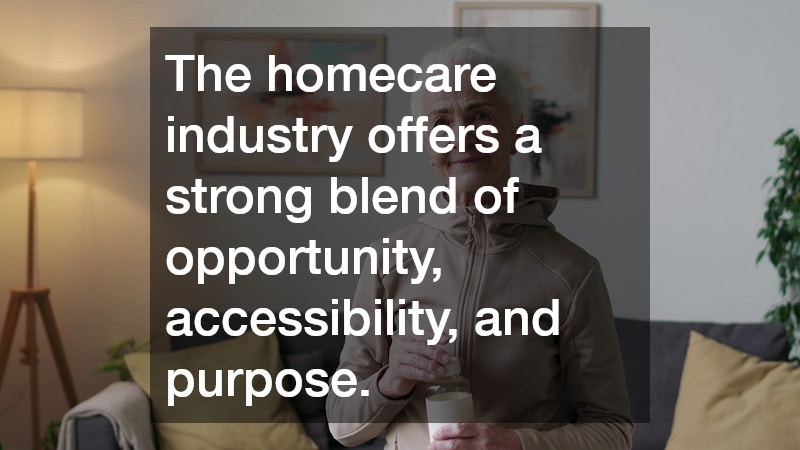
The home care industry offers a strong blend of opportunity, accessibility, and purpose. With demand continuing to grow, low startup barriers, and the ability to make a lasting difference, this field stands out as one of the most promising paths for new entrepreneurs. Individuals who enter this market gain the chance to build a business that supports their community while providing families with essential services they can rely on. If you want an engaging business that blends financial stability with meaningful work, the home care sector is a smart place to begin.